Prosocial Community Initiative--A New Paradigm of Prosocial Urban Development via an Interative Simulation Platform
Introduction
In cities all around the world, the current urban development has problems such as value extraction, inequality, and lack of transparency. How can we develop a new process for prosocial urban development, which preserves value in the community, build amenities that the community demands, support the local economy, reduce inequality, and be transparent and trusted?
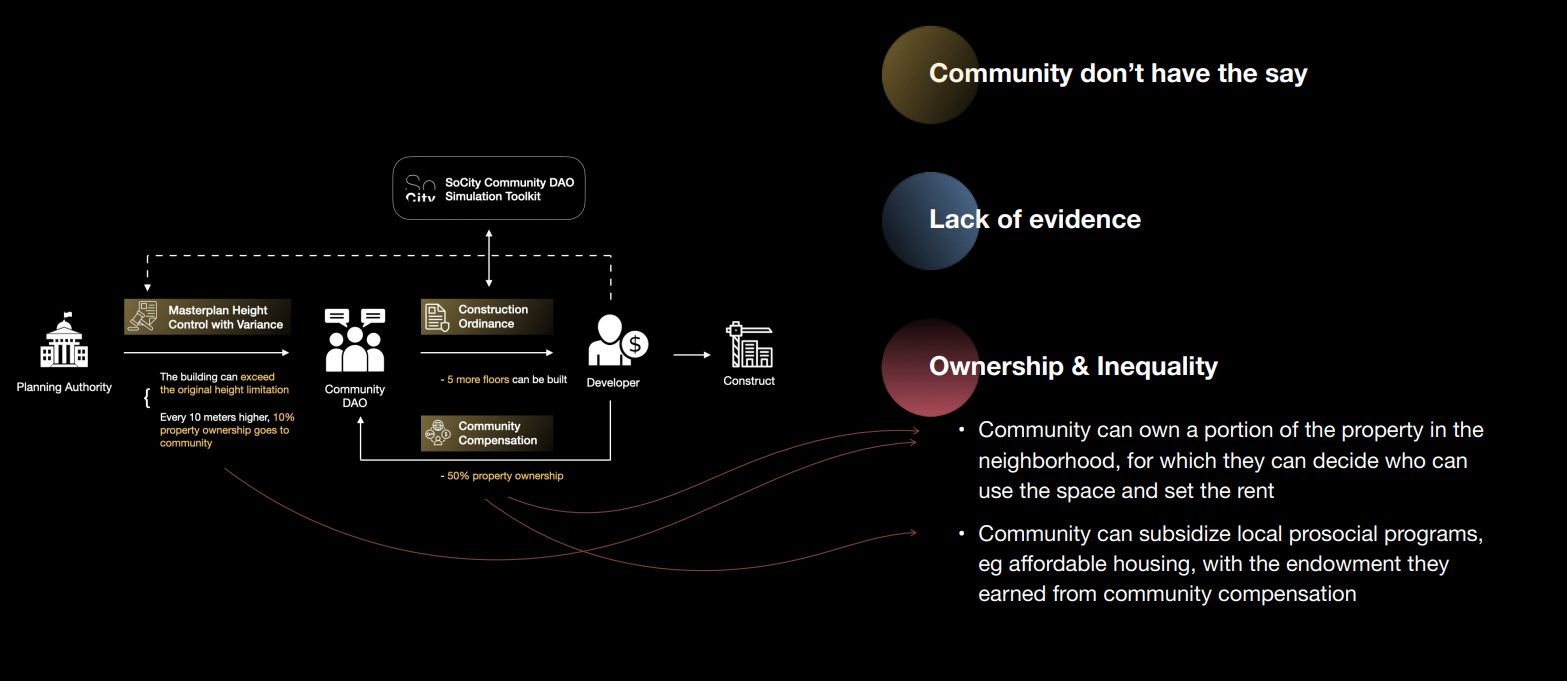
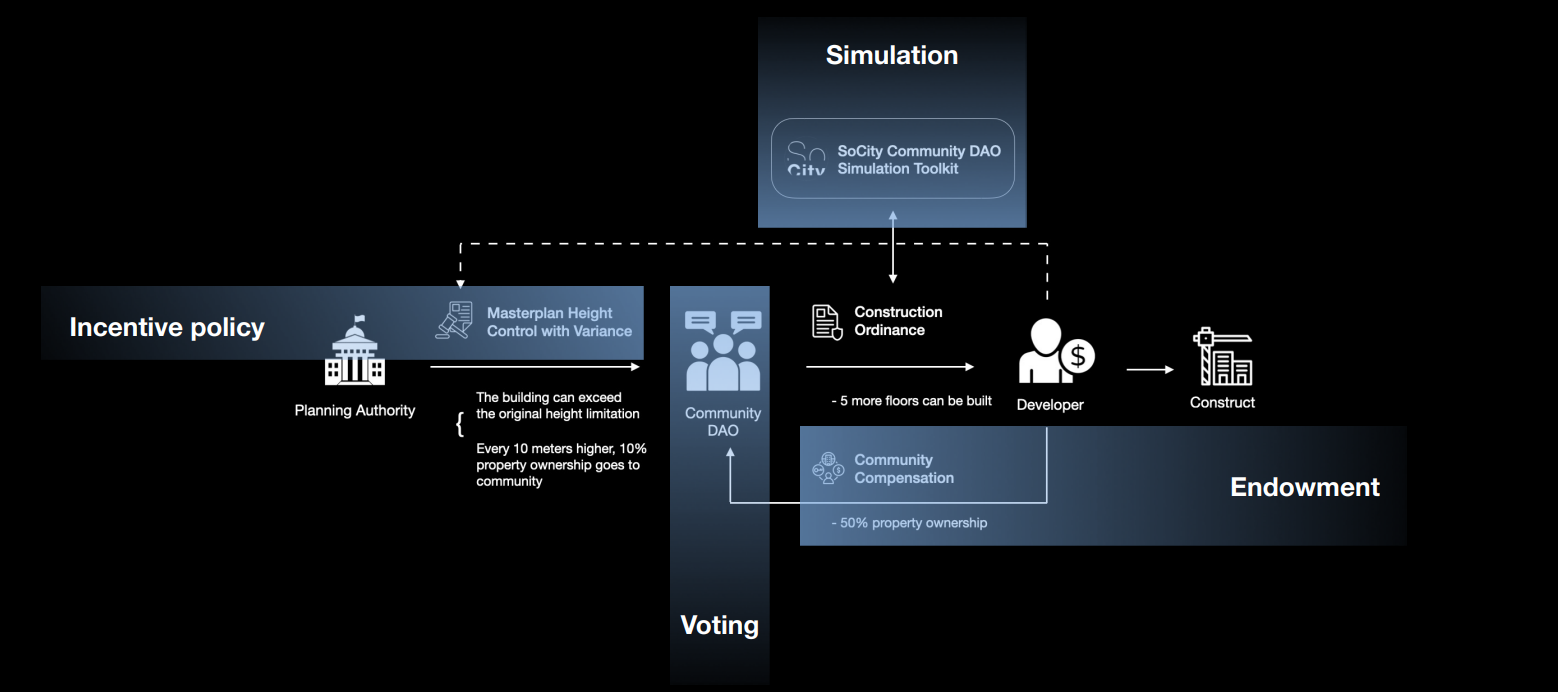
Prosocial Community Initiative is a new process for prosocial urban development. In its process, the planning authority will draft a masterplan height control with variance. Dynamic control has two parts. One is the height range. Unlike the conventionally static height limit number, the building can be built within a height range which exceeds its original limitation. The other is a compensation scheme. For example, if the developer builds 10 meters higher, he/she must give 10% of the property ownership to the community. Based on this masterplan control, community member will vote for their construction ordinance. Put it simple here, how many extra floors they allow the developer to build. The decision-making process will be aided by the SoCity simulation toolkit. Finally, the developer can build based on the ordinance agreed by the community, and give back the compensation as set by the planning authority.
Web-based Interactive Sandbox
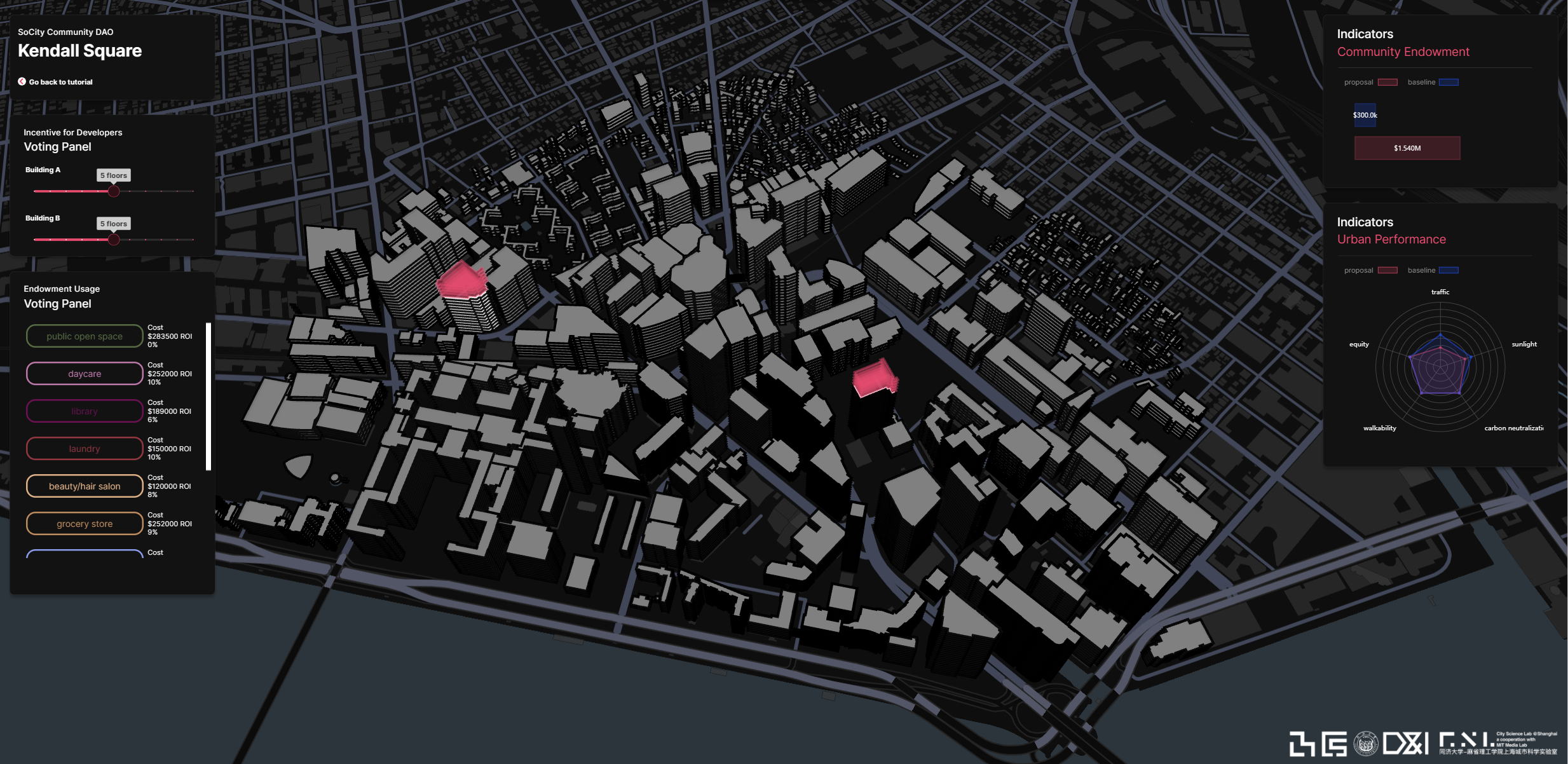
At city science summit 2022, we held a workshop titled SoCity Community Process: A New Process for Pro-social Urban Development. In this workshop, participants will be introduced to the technologies and research works around blockchain, smart-contract, token economies, decentralized governance, urban simulations, and algorithmic zoning. Then participants will form teams to explore novel, prosocial, decentralized urban development processes that enables the community members to gain leverage over traditionally more powerful stakeholders such as real estate developers; to grow their ownership and wealth in the community; to coordinate how to fund and use community endowments; to gain the tools and insights to predict the impact of their decisions; to define membership and relevance in a more fine-grain way; to improve data privacy and operation efficiency and transparency; and many more, in both context of Cambridge and participants’ home cities.
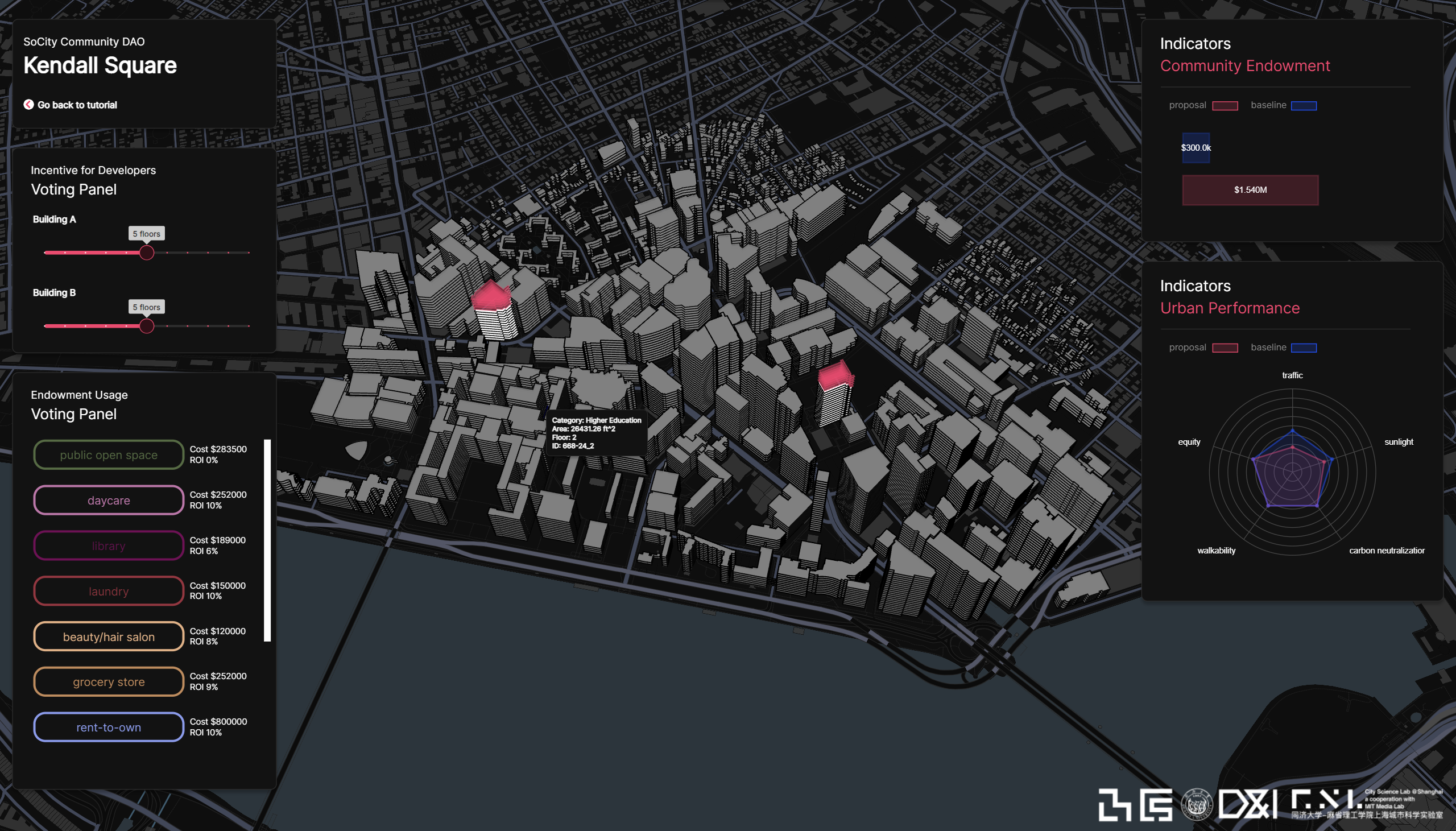
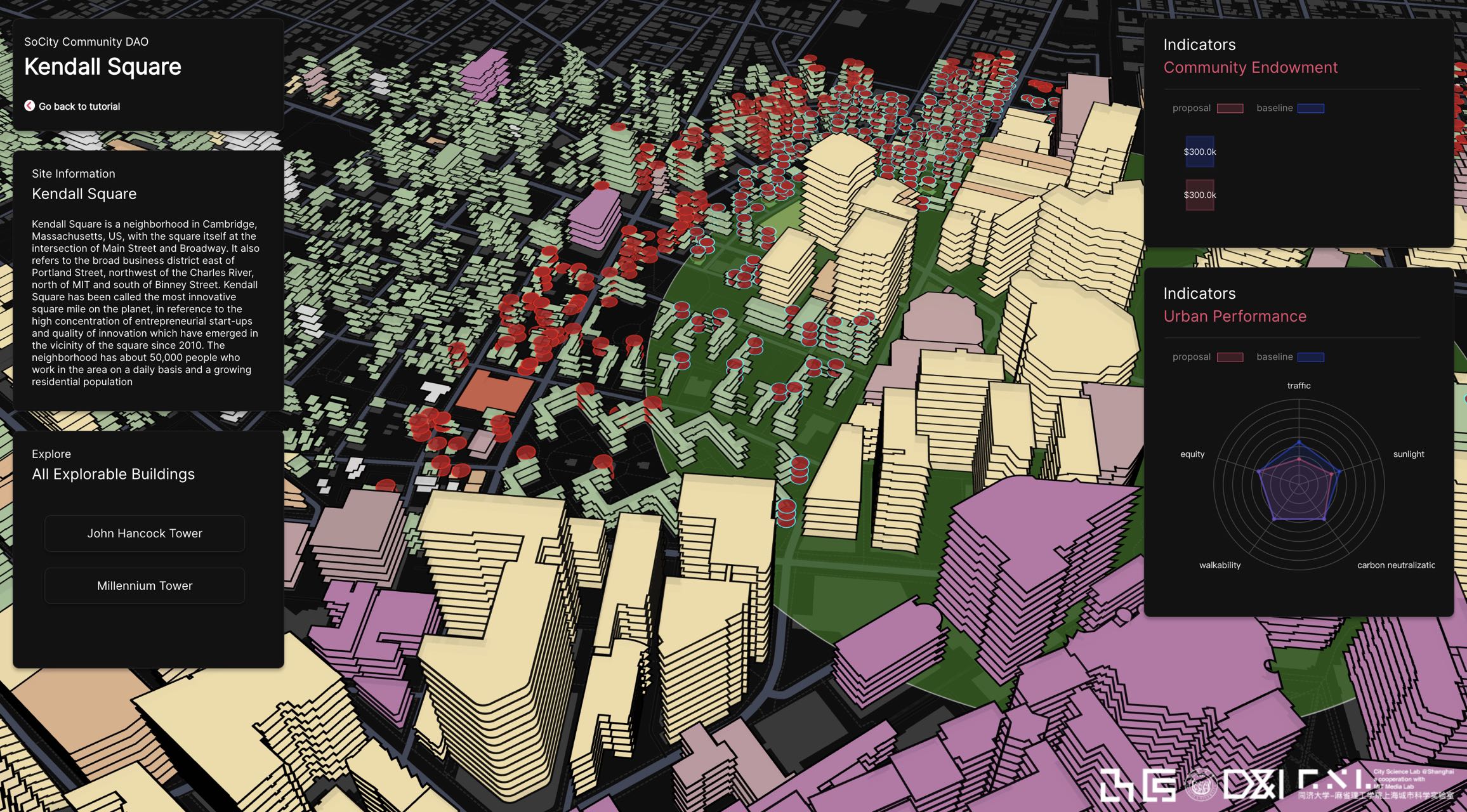
Thus, we prepared data and a Web-based Interactive Sandbox tools to facilitate the exploration for both economics and governance purposes.
Components
The Community DAO has four components - incentive policy, voting, endowment and simulation.
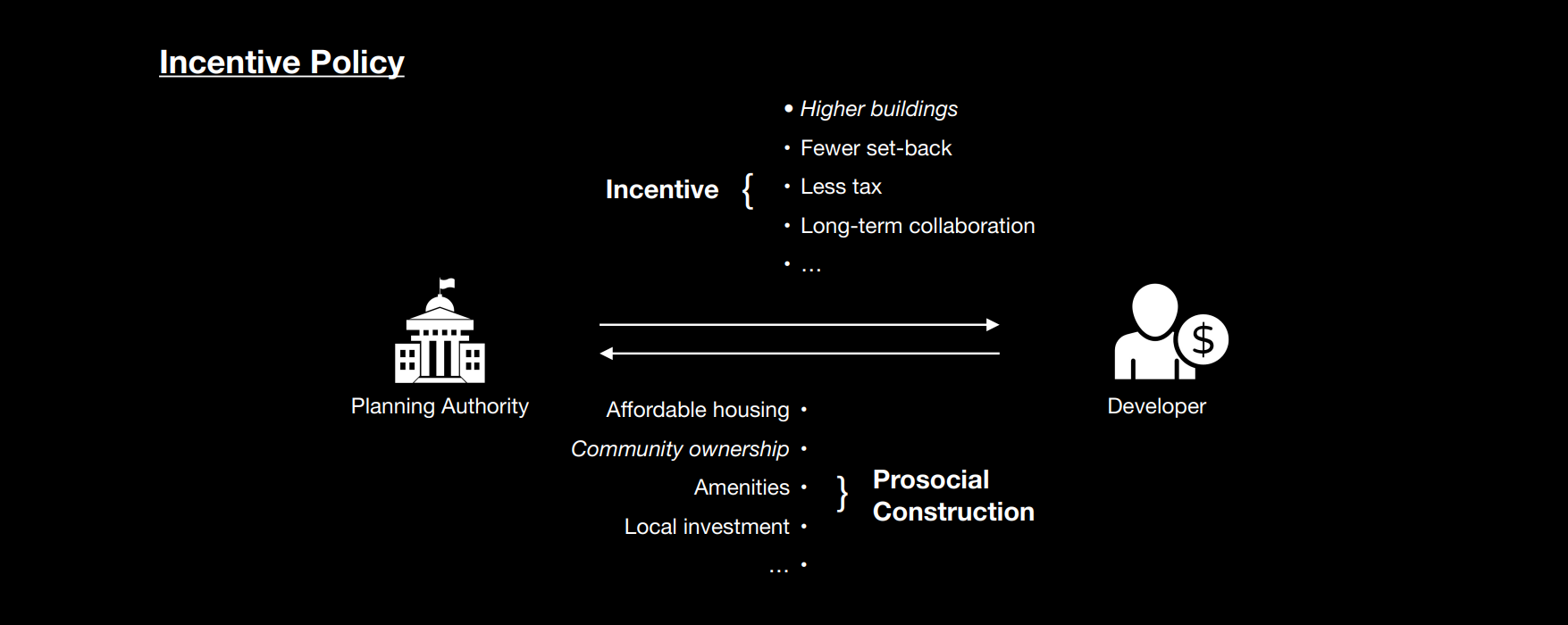
Incentive Policy is a mechanism to use certain rewards in exchange for anticipated behaviors. In our process, the incentive policy works between the planning authority and the developers. Like you have seen, to have more buildable areas is one type of incentive. Others can be fewer set-back, less tax, long-term collaboration etc. The key is to provide things that align with what the developers want. Then, upon receiving the incentives, the developer needs to conduct prosocial constructions. What we have mentioned is to give the community ownership, others including affordable housing supply, amenities supply, more local investment, etc.
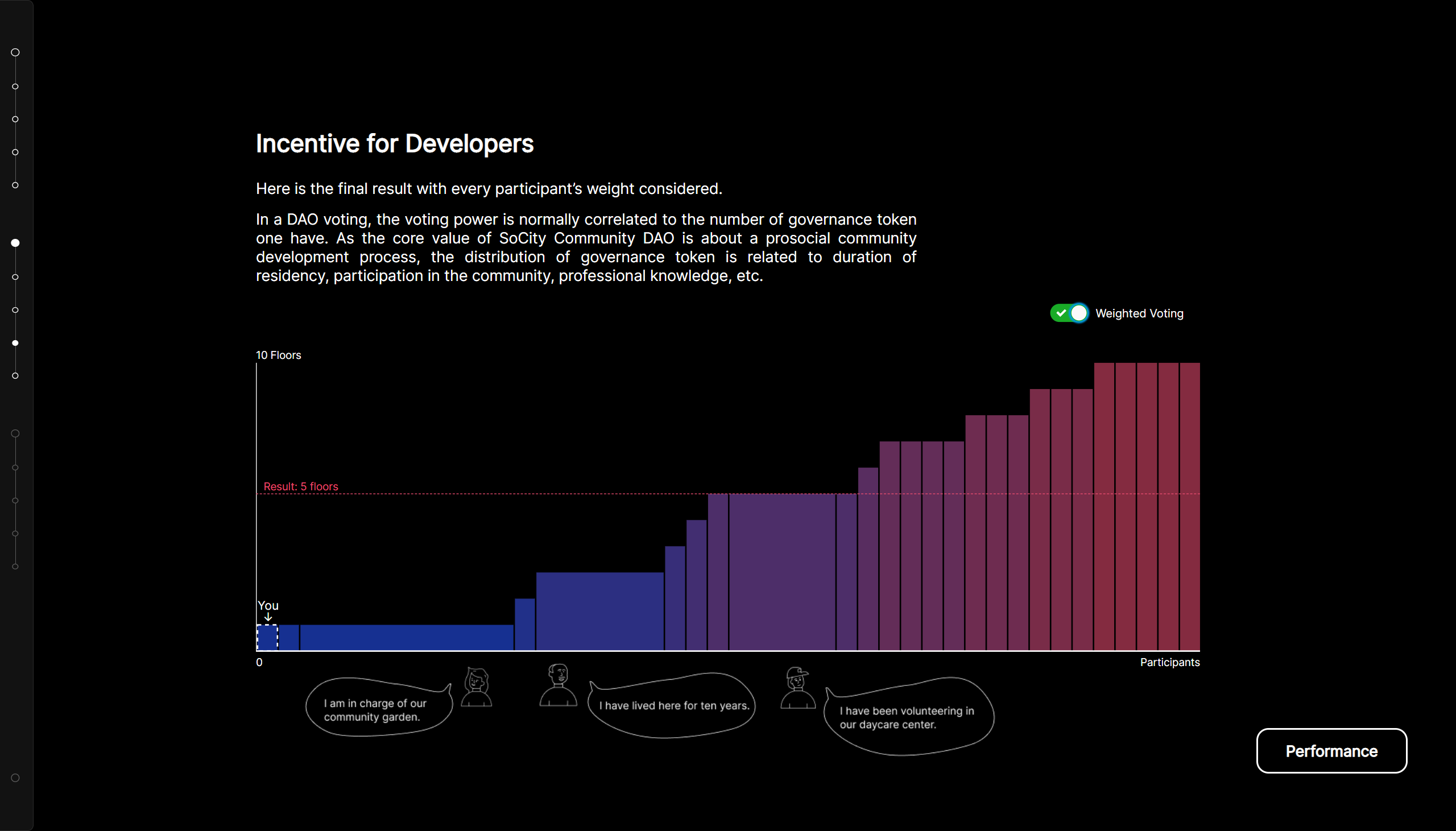
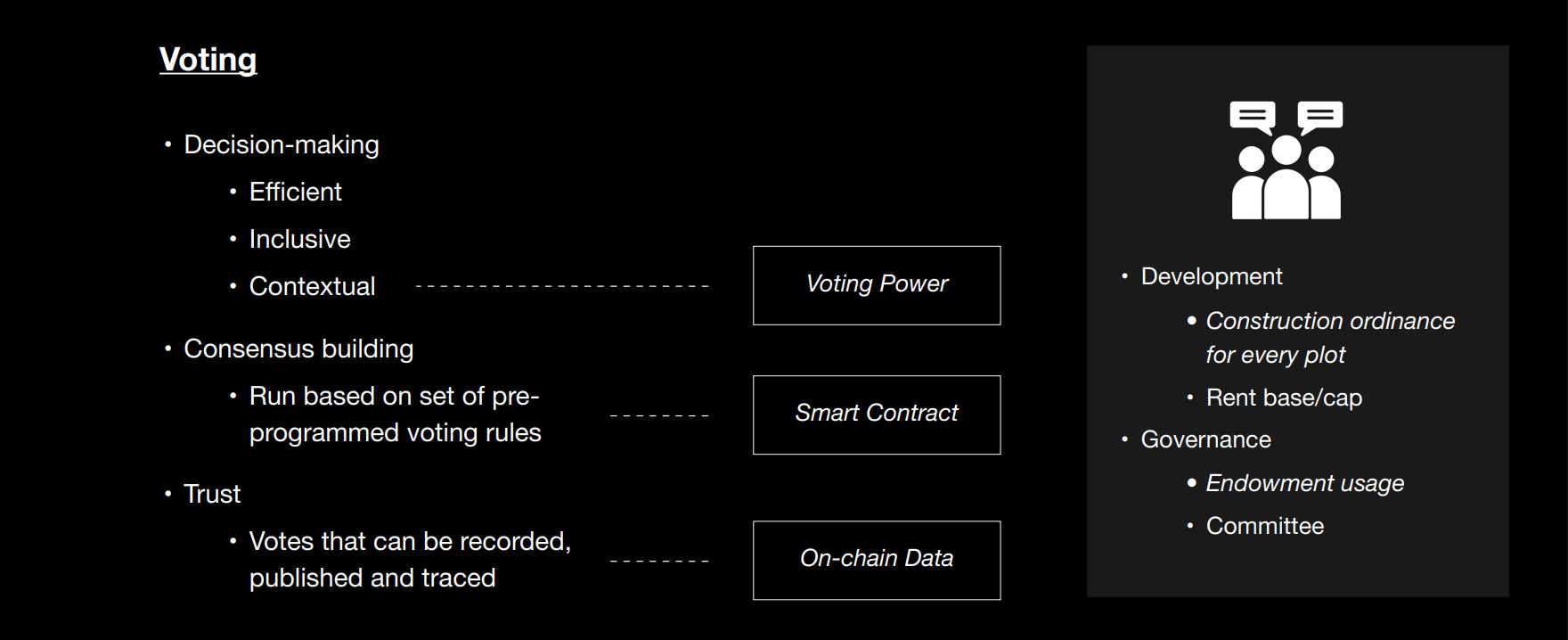
Voting as a way of decision-making is efficient, inclusive and contextual. In decentralized voting, different people can have different voting power. In community DAO, the power is correlated to one’s relevance to the community and construction. For example, a person who has lived here for more than ten years can have higher voting power than a new-comer for his/her local knowledge and affections.
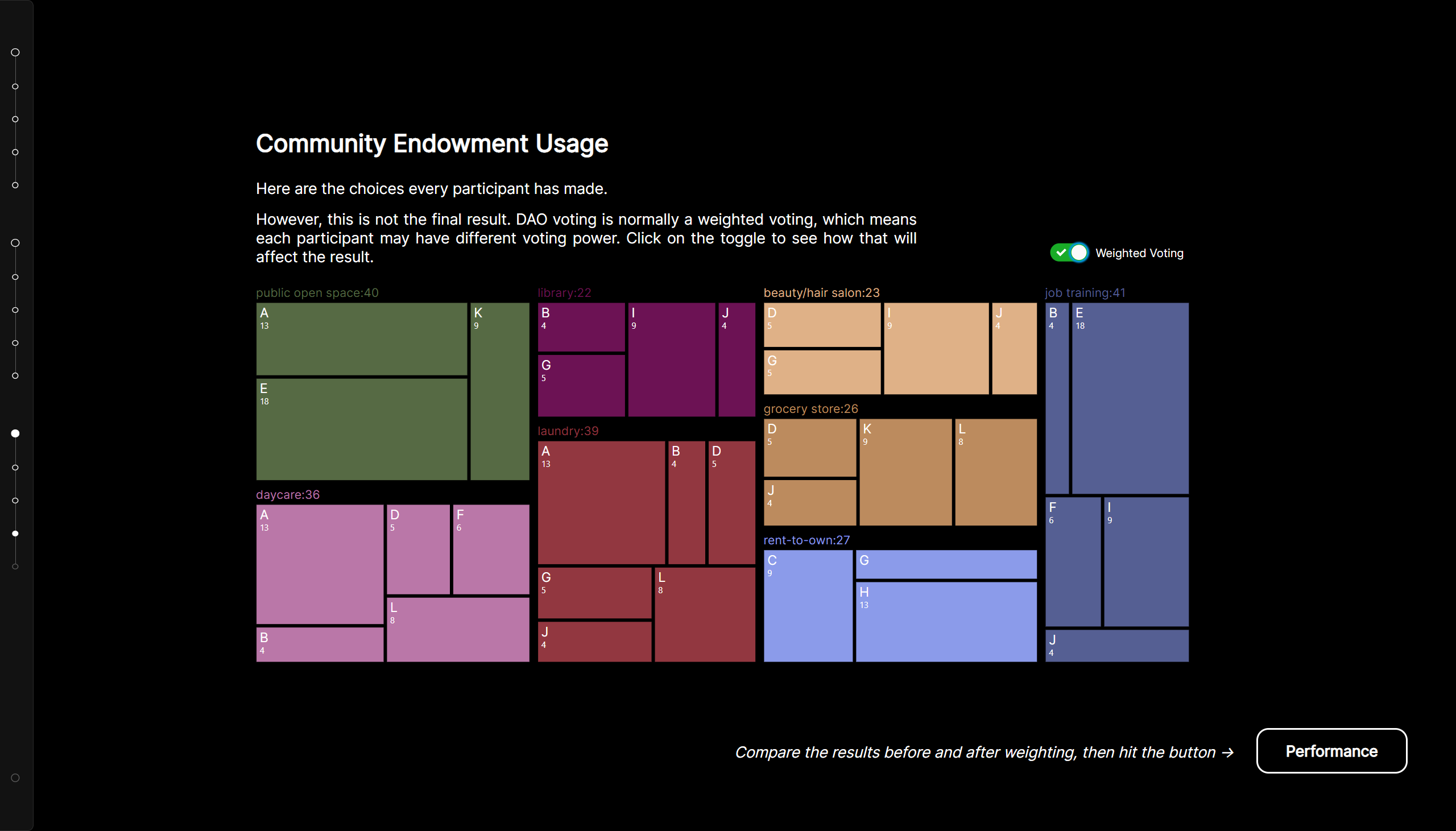
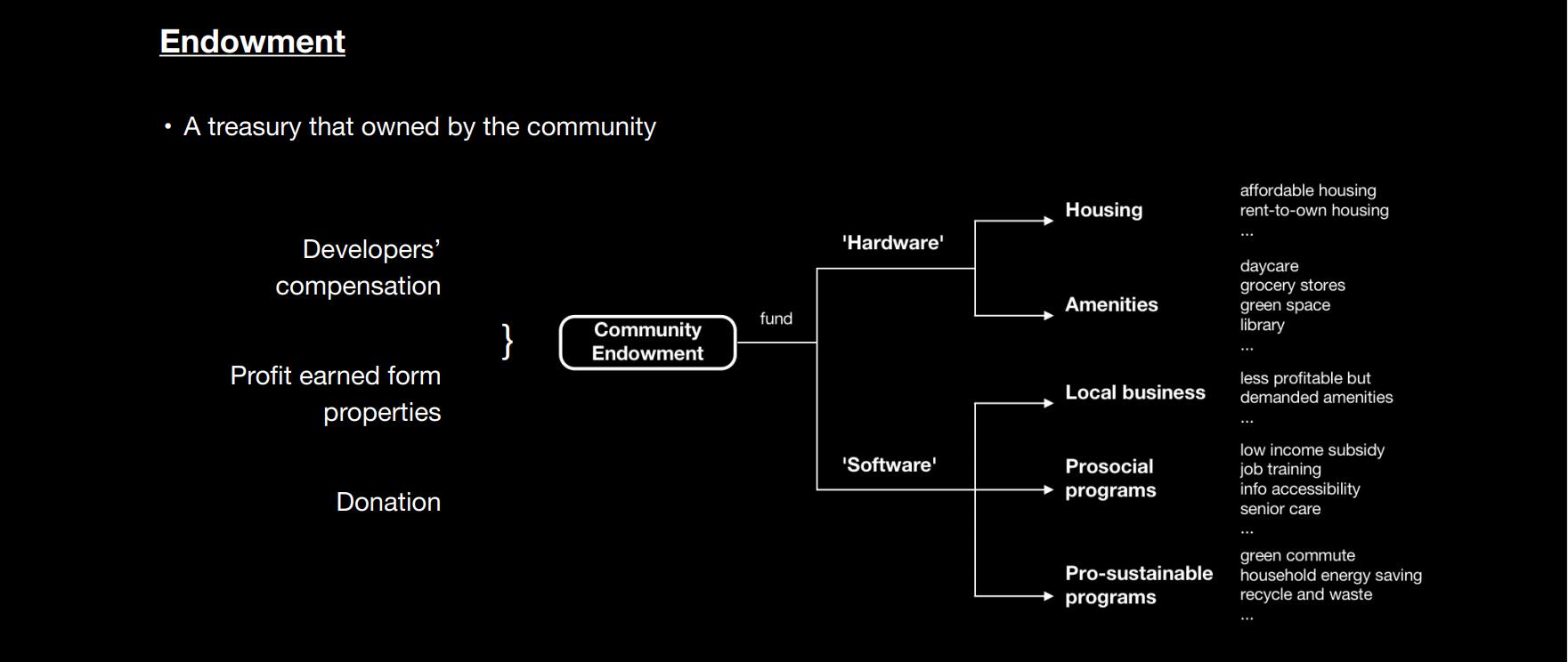
Endowment is a treasury owned by the community. Its money can come from developers’ compensation, profit earned from their properties, donations, etc. The community DAO will decide on how to use that endowment to improve its quality of life.
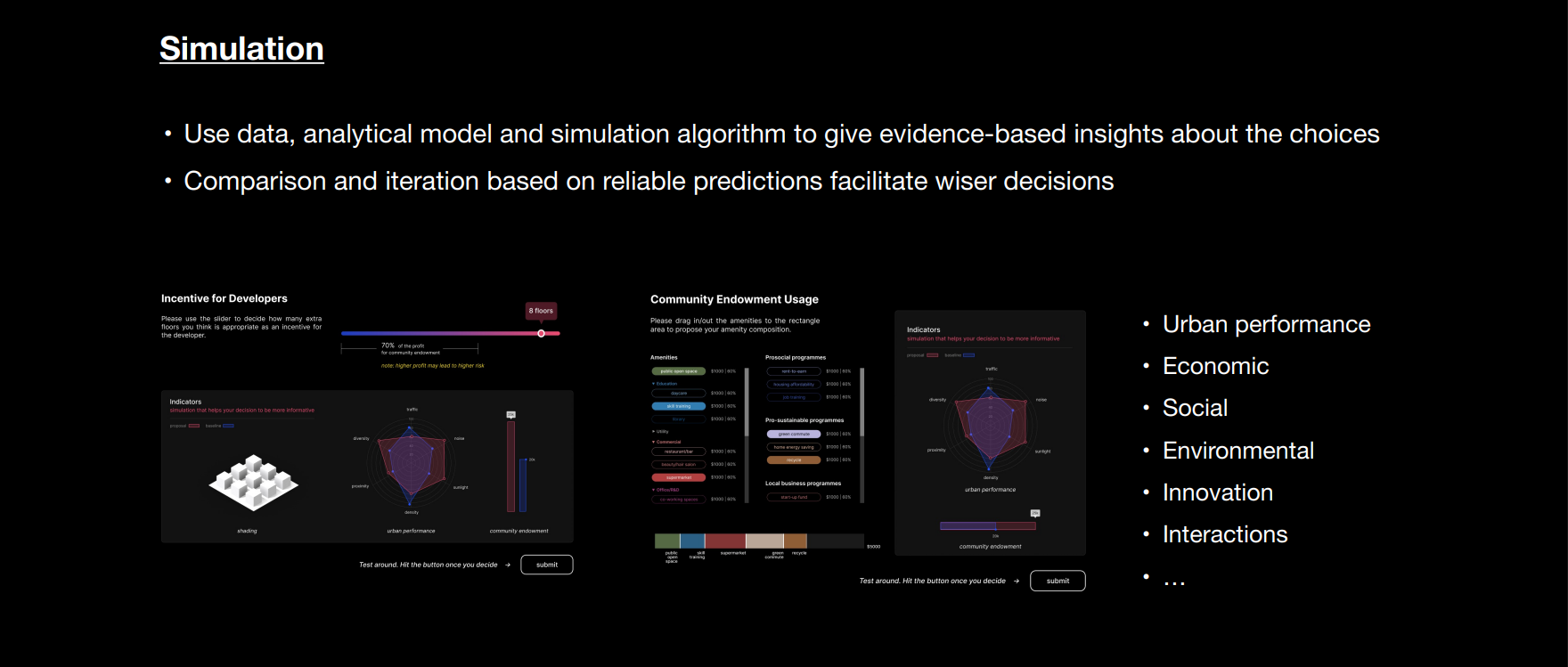
Using data, analytical models and simulation algorithms, the community can have more evidence-based insights about the choices. Real-time simulation and reliable predictions can make comparison and iteration more effortless, which we believe is crucial for wiser decisions.
Workshop at MIT City Science Summit 2022
Acknowledge
Team: Kejiang Qian, Chance Jiajie Li, Charlotte Jiwen Ge, Ziyi Guo, He Guo, Jue Ma, Tongqing Zhu, Zhuxuanzi Wang, and Yan Xiang
Direction: Ryan Yan Zhang, Leon Yang Liu, Yongqi Lou, and Kent Larson
Related Links
View our interactive platform: Interactive Platform for Prosocial Community